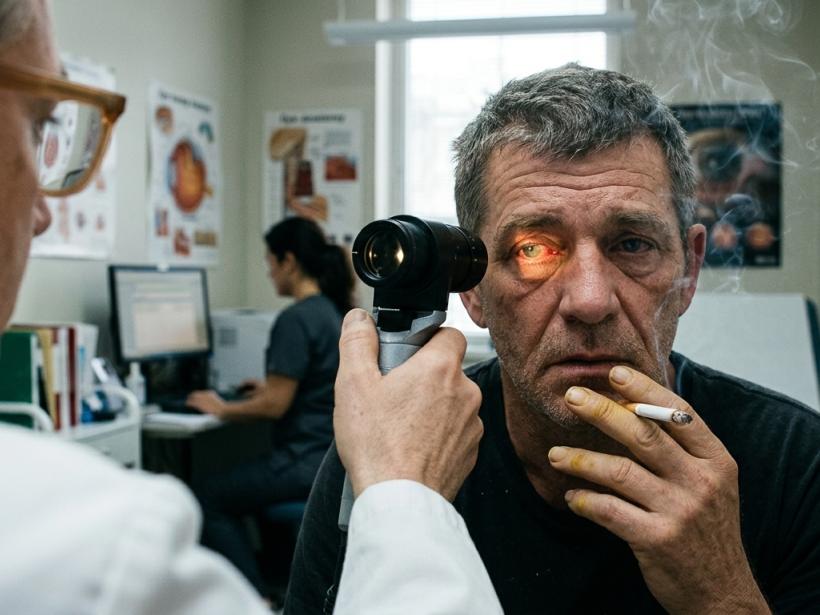

Apart from its effect on the lungs, smoking may have significant implications for eye health. It can irritate the tissues of the eyes, leading to various eye problems that can affect vision in the long term. So, how does smoking affect eye health? This is a significant question that helps make appropriate lifestyle choices.
Effects of Smoking on Vision
The chemicals inhaled during smoking are the main triggers. These chemicals include nicotine, which is known to cause oxidative stress in ocular tissues. This increases the risks of degenerative eye conditions. There are those who ask, “Can smoking cigarettes cause eye problems?” The answer is yes.
The effects include smoking and blurred vision. There is also dryness, redness, irritation, tiredness of the eyes, and wateriness. In addition, there is an effect of smoking on night vision. This is due to chemicals in the smoke. These chemicals impair the retina's ability to adapt in low light. This is referred to as smoking and night vision.
Long-term effects are even more alarming. Chronic smoking has a very high association with age-related macular degeneration, cataracts, and optic neuropathy, all of which can affect long-term vision. For those who are curious, “Can smoking permanently damage your eyes?”, the scientific evidence reveals that long-term exposure to cigarette products can result in permanent structural damage to the tissues of the eye and the lens.
Physiologically, the long-term effects of cigarette products on the eye are a result of oxidative stress, reduced oxygenation, and inflammation. Even short-term exposure to cigarette products results in microvascular vasoconstriction, causing subtle damage to vision. As experts on the subject of smoking and eye health report, "Smoking is the leading preventable cause of blindness in adults."
The key short-term effects of smoking on vision include:
- Eye irritation and redness
- Blurred vision and difficulty focusing
- Decreased ability to see at night
- Eye fatigue and dryness
These effects show the need to understand the relationship between the sensitive structures of the eyes and cigarette smoking.
Recognizing Warning Signs and Symptoms
It is essential to recognize the early warning signs and symptoms of damage to the eyes as a result of smoking in order to maintain good eyesight. The symptoms of damage include blurry vision, inability to see in the night, eye fatigue, and extreme sensitivity to light.
Smokers often wonder, How long does it take for your eyes to go back to normal after smoking? The answer is that some of the irritation may go away in a matter of hours or days after quitting, but the long-term damage to the eyes is irreversible.
Long-term exposure to smoking may cause problems such as macular degeneration and cataracts, which may impair eyesight and affect other activities. Questions such as Do eyes heal after quitting smoking? indicate that the answer is not straightforward, as some of the damage is irreversible.
Identifying these signs at an early stage is also beneficial in taking appropriate eye safety measures and making appropriate lifestyle choices. Monitoring changes in vision clarity, night vision, and sensitivity to light enables individuals to assess their conditions appropriately. Even minor signs of eye problems may be associated with significant structural changes that occur internally.
Conclusion: Protecting Your Vision and Reducing Risks
The interrelationship between smoking and eye health is multifaceted and fundamental. Compounds in tobacco products affect blood flow, stimulate eye tissues, and hasten degenerative eye processes, which result in symptoms ranging from smoking-caused blurred vision to cataracts and macular degeneration. Being knowledgeable about eye risks is essential in maintaining good vision.
Practical measures that may be taken for the preservation of eye health include:
- Stopping smoking, as this may prevent further oxidative damage
- Scheduling regular eye exams to monitor any change in vision
- Avoiding exposure to secondary cigarette smoke and environmental irritants
- Adhering to a set of eye care tips for the proper functioning of the eyes
As the American Academy of Ophthalmology puts it,
“Smoking is a major risk factor for developing cataracts and age-related macular degeneration, which are leading causes of vision loss in adults.”
Through the knowledge of “How does smoking damage eye health?”, a person may take necessary measures to prevent any damage to eye health. The early recognition of the signs and symptoms, along with a number of measures, may go a long way in the preservation of eye health, despite the effects of smoking.