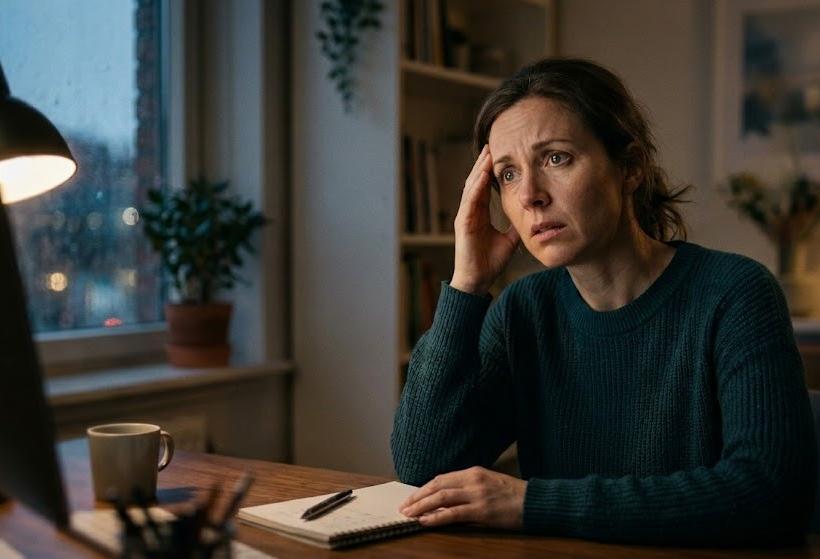

The reaction to stress occurs through the brain, triggering the automatic fight or flight response, which is designed to ensure our survival through protection against danger. In cases of stressful emotional experiences, such reactions can affect various physical processes within the body, including eyesight, in ways that are surprising.
Many people are concerned about the question “Can stress and anxiety cause vision problems?” when they face occasional blurring, discomfort in their eyes, or sensitivity to light during challenging situations.
The Physiological Impact of High Cortisol on Vision
The science of stress biology is an intricate system where the eyes are considered very delicate optical lenses requiring a stable neurological connection. Consider the eye as an accurate instrument whose visual acuity becomes unstable as a result of stress, which increases cortisol and adrenaline in the nervous system.
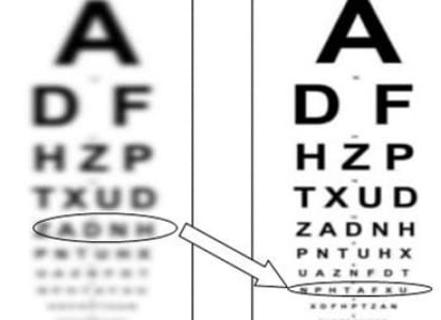
This is how the question "why does stress affect eyesight" arises in most people when enduring chronic emotional strain. Blurry vision due to stress and anxiety happens because the muscles in the eyes become tense continuously.
Adrenaline causes dilation of the pupil, resulting in excessive absorption of light and even temporary visual distortions in bright conditions. Moreover, constant stress makes muscles tired in the neck, face, and eye area, affecting the process of focusing.
Many times, symptoms will show themselves in a logical sequence:
- Unexpected difficulties while focusing on close objects
- Eye fatigue from screen exposure
- Temporary visual problems during stress
In some cases, the causes are associated with vision problems during stress and anxiety episodes, where the problem is not within the anatomy of the eye, but with the overworking of the nerves.
If one asks “why does stress affect eyesight?”, the answer is that it is usually caused by poor communication between the eyes and the brain, instead of a problem affecting the eyes. In other extreme cases, stress and double vision may be experienced where the brain is unable to coordinate the visual input due to fatigue.
Recognizing Sensory Disturbances and Anxiety Indicators
High levels of emotional arousal increase one’s sensitivity to sensory input, causing normal stimuli to seem unpleasant. Does anxiety cause light sensitivity when experiencing such symptoms in regular lighting situations? Yes, and this is because the brain goes into an overactive mode and analyzes excessive data from the environment.
Anxiety can distort sensory input in other ways as well, particularly when the person is exhausted or experiencing acute anxiety attacks. These include:
- A more acute sense of normal floaters
- Perceiving shadows and light reflections incorrectly
- Distorted peripheral vision for some time
This brings up another common question: can anxiety cause black spots in vision? In fact, most of the described sensations do not indicate physical problems but rather intensified perception. Still, the person’s emotional response to them may perpetuate this process.
Constantly asking questions such as "Does anxiety cause light sensitivity or can it cause black spots in vision?” may only intensify the attention given to the condition itself. The circular connection between perception and anxiety is one of the significant reasons for this condition's intensification during stressful moments.
Conclusion: Managing Stress for Clearer Vision
Mental stress and emotional overload impact the functioning of the nervous system, including the sensory system. For instance, the question Can stress and anxiety cause vision problems? would receive an affirmative answer; however, it is not a permanent eye condition. Moreover, the problem is associated with the regulation of the nervous system and not any ocular diseases. Therefore, it is possible to eliminate visual discomfort through deep breathing exercises and the 20-20-20 technique.
They will contribute towards stabilizing the cognitive load and might relieve some of the visual issues linked to stress and anxiety and blurred vision. In case of continued deterioration or persistence of visual changes, they must be taken seriously because there might be some neurological and ocular disorders not directly linked to stress alone.
Visual changes during stress seem to occur more frequently now due to consistent exposure to technology-related stressors. Once equilibrium in the nervous system is restored, the visual changes will normalize. Particular attention is typically needed in cases of aging eyes or issues with children's vision.
Nonetheless, seeking professional advice when visual disturbances persist will guarantee that any undiagnosed eye condition does not go unchecked.