
There Is No One-Size-Fits-All IOL
“Best IOL for cataract surgery” means different things to different people. The ideal intraocular lens (IOL) depends on what you most want to see without glasses, your eye health, and how you feel about visual trade-offs such as halos at night. Cataract surgery removes the eye’s cloudy natural lens to restore clarity; the IOL that replaces it provides the focusing power. The right choice is made together with your ophthalmologist after a careful exam and a discussion of your goals.
This guide explains how to clarify your priorities, outlines common lens types, and offers practical steps to prepare for your consultation. It is educational and not medical advice; decisions should be individualized with your clinician.
How IOLs Differ: The Main Categories
All modern IOLs aim to restore clarity after the cloudy lens is removed, but they focus light in different ways and have different trade-offs:
- Monofocal IOLs: Provide one primary focal point (commonly set for distance). They tend to offer high image quality and contrast with fewer night-vision side effects for many patients. Most people still need glasses for near tasks and sometimes for intermediate work.
- Toric IOLs: Variants (often monofocal, but also available in other designs) that correct regular corneal astigmatism. They are less effective for irregular astigmatism (for example, from keratoconus or corneal scarring) and do not address astigmatism arising inside the eye from an irregular natural lens, which is removed during cataract surgery. Success depends on accurate measurements and precise rotational alignment.
- Extended Depth of Focus (EDOF) IOLs: Extend focus over a continuous range, typically from distance through intermediate (computer, dashboard). Many patients still use readers for fine print or in dim lighting. Some notice halos or glare, especially early on.
- Multifocal/Trifocal IOLs: Split light into two or more focal points to provide distance, intermediate, and near vision and can reduce dependence on glasses. They are more likely to be associated with halos, glare, and reduced contrast sensitivity, especially at night. Eye health and pupil size can influence satisfaction.
- Accommodating IOLs: Designed to shift focus within the eye. Real-world near performance varies by individual and anatomy. Your surgeon can explain whether this category suits your eyes.
- Light-adjustable IOLs: Allow postoperative fine-tuning of your prescription with in-office light treatments. This can be helpful when precise targeting is important (for example, after prior LASIK/PRK or when you want to trial mini-monovision). They require wearing protective glasses and completing all adjustment and “lock-in” sessions.
Multiple brand-name lenses exist in each category. Your surgeon will recommend models that match your measurements and visual goals.
Clarify Your Vision Goals and Daily Life
Before your visit, note the tasks you most want to do with minimal dependence on glasses. Be specific and rank what matters most:
- Reading and screens: Do you read books, use a tablet, or spend hours on a computer? How small is the text you prefer? Do you need crisp near vision for fine detail?
- Night driving: How often do you drive at night? Are you sensitive to halos or headlight glare now?
- Hobbies and work: Golf, tennis, woodworking, photography, sewing, cooking, music, or professions that demand precise near or intermediate vision may push you toward different targets.
- Distance priorities: Do you want the clearest possible distance vision for sports or travel and accept reading glasses for near tasks, or do you prefer broader range with some trade-off in night vision?
Monovision and Blended Vision
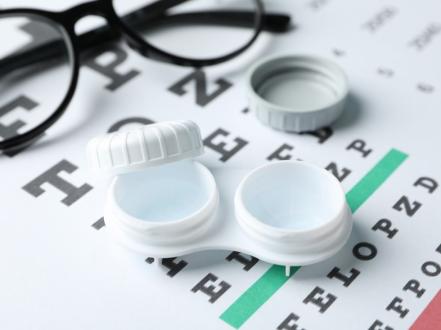
Some people choose monovision (one eye set for distance, the other for near) or a blended approach (distance and intermediate, or a small “mini-monovision” offset). This can reduce reliance on readers but may affect depth perception and night clarity. If you have not tried it, ask about a contact lens trial to simulate the effect before surgery.
Budget and Insurance: What to Know
In the United States, most insurance plans, including Medicare, generally cover medically necessary cataract surgery with a standard monofocal IOL and the related facility, anesthesia, and surgeon’s fees. Options that correct presbyopia or astigmatism (for example, toric, EDOF, multifocal, or light-adjustable features) are typically out-of-pocket upgrades. Coverage details vary by plan.
- Ask for a written, itemized estimate separating covered charges from elective upgrades.
- Clarify what’s included: pre-op testing, postoperative visits, potential enhancements (such as laser touch-up), and supplies.
- Ask about payment options, financing, and use of HSA/FSA funds.
- If cost is a concern, discuss strategies to prioritize your top visual goals within covered options.
Astigmatism: Why It Matters
Astigmatism is a common cause of blur at all distances and is often corneal. Addressing regular corneal astigmatism during cataract surgery can improve uncorrected clarity. Your surgeon will assess the type (regular versus irregular) and magnitude with corneal topography/tomography and your refraction.
- Toric IOLs: Best suited for regular corneal astigmatism; results rely on accurate biometry, proper power selection, and precise rotational alignment. Rarely, a toric IOL may rotate and require realignment.
- Incisional techniques: Limbal relaxing or laser arcuate incisions can address milder amounts of astigmatism and may be combined with other approaches.
- After surgery: Residual astigmatism can sometimes be refined with glasses, contact lenses, laser enhancement, or, in select cases, toric IOL rotation/exchange.
Bring prior glasses prescriptions and any history of contact lens wear or eye surgery. A short “contact lens holiday” before measurements can improve accuracy, especially if you wear rigid or specialty lenses.
Eye Health and Medical Factors That Shape Your Options
Your ocular health strongly influences which IOLs are suitable and how likely you are to notice certain side effects. A thorough exam and testing help tailor recommendations:
- Macula and retina: Conditions such as age-related macular degeneration, diabetic retinopathy, or epiretinal membranes may limit the benefit of presbyopia-correcting optics. In these cases, your surgeon may prioritize image quality and contrast.
- Glaucoma or optic nerve disease: Visual field loss and contrast sensitivity changes can affect how you experience multifocal or EDOF designs. Monofocal targets may be favored.
- Cornea and ocular surface: Dry eye, blepharitis, or corneal irregularities blur both measurements and outcomes. Treating the surface before surgery improves accuracy and satisfaction. Irregular corneas (for example, keratoconus) generally do not pair well with toric or diffractive multifocal optics.
- Corneal endothelium: Conditions such as Fuchs dystrophy increase the risk of corneal swelling and may make presbyopia-correcting lenses less suitable.
- Zonular support and capsule health: Pseudoexfoliation or prior trauma may reduce IOL stability, which can influence suitability for toric and multifocal designs.
- Previous LASIK/PRK/RK: IOL power calculations are more complex after corneal surgery. Certain IOL designs or a light-adjustable option may be considered, and expectations may be adjusted.
- Pupil size and night vision: Larger pupils can make halos and glare more noticeable. Share any history of night-driving difficulty.
- General health and medications: Some medications and systemic conditions can affect healing or pupil behavior. Provide a complete medication and medical history.
Night Driving and Visual Quality
All IOLs aim for clear vision, but their optical designs can influence night experiences. Halos, glare, and starbursts (dysphotopsias) can occur with any lens and may persist in a minority of patients. These phenomena are reported more often with diffractive multifocal/trifocal and some EDOF designs. Monofocal lenses tend to have fewer photic phenomena for many people and may offer higher contrast. Your tolerance, driving needs, pupil size, and overall eye health will guide the discussion. Ask your surgeon how each option might affect night driving and contrast in your specific case.
Setting Realistic Expectations
Every IOL involves trade-offs. Define what “success” looks like for you and discuss it openly:
- Glasses independence varies: Even with advanced lenses, you may still use glasses for some tasks (for example, fine print or dim lighting). With monofocals, most people rely on readers for near work.
- Adaptation takes time: The brain may take weeks to months to adapt to new optics, particularly with multifocal or EDOF designs.
- Two-eye planning: Vision usually feels more balanced after the second eye. Some patients fine-tune the target in the second eye based on the first eye’s outcome.
- Residual refractive error: Small amounts can remain and may be addressed with glasses, contact lenses, laser enhancement, or, less commonly, IOL rotation or exchange. Spectacle independence cannot be guaranteed.
Preparing for Your Consultation
Arrive ready to describe your daily activities and what you hope to do without glasses. Bring your latest glasses prescriptions, a list of medications, and any prior eye-surgery records. Expect testing such as biometry (IOL power calculations), corneal topography or tomography, and a dilated retina exam. If dry eye signs are present, your surgeon may first treat the ocular surface to sharpen measurements. If you wear contact lenses, ask whether you should pause them before biometry to improve accuracy.
Quick Lens-Choice Framework by Goal
Use this as a conversation starter, not a prescription:
- Maximize distance clarity and minimize night halos: Many patients consider a monofocal targeted for distance (with readers as needed).
- Distance plus strong intermediate (computer, dashboard): EDOF lenses are often discussed; readers may still be needed for fine print.
- Broadest range of spectacle independence: Multifocal/trifocal lenses can reduce dependence across distances but may trade off some night-vision quality and contrast.
- Astigmatism present: Toric versions of the above categories can sharpen uncorrected vision when astigmatism is regular and corneal.
- Open to blended targets: Monovision or mini-monovision can reduce readers; a preoperative contact lens trial is recommended if you are new to it.
- Prior LASIK/complex corneas or desire for fine-tuning: Ask whether a light-adjustable IOL could be appropriate.
Key Questions to Ask Your Surgeon
- Based on my measurements and eye health, which IOL categories fit my goals, and why?
- What range of vision (distance, intermediate, near) can I realistically expect with each option, and how might this affect night driving and contrast?
- How will you address my astigmatism, and what if some remains after surgery?
- Would monovision or a blended approach suit me? Can we simulate it with contact lenses first?
- I have had LASIK/PRK/RK—how does that change calculations and lens choice? Is a light-adjustable IOL an option for me?
- What pre-op treatments (for example, dry eye therapy) could improve accuracy and outcomes?
- What are the total costs, what does insurance cover, and what are the fees for lens upgrades or possible enhancements?
- How do you handle dissatisfaction, residual refractive error, or the rare need for IOL rotation or exchange?
After Surgery: What to Expect
Vision often improves within days, with further refinement over weeks as the eye heals and the brain adapts. Temporary glare, halos, and dry-eye symptoms are common early and often lessen over time. Follow your drop schedule, protect your eyes as instructed, and keep all follow-up appointments.
Months to years later, some people develop posterior capsule opacification (a haze behind the IOL) that can blur vision. This is treated with an in-office Nd:YAG laser capsulotomy. It improves clarity from capsule haze but does not treat optical halos and can make any later IOL exchange more complex, so timing is individualized.
If you do not achieve the expected clarity, discuss timing for glasses, contact lenses, or a possible laser enhancement once your refraction stabilizes. Report urgent red flags promptly: increasing eye pain, sudden vision loss, or new flashes and floaters.
The Bottom Line
The “best IOL” is the one that matches your most important activities, your tolerance for visual trade-offs, your eye health, and your budget. Use the questions and frameworks above to clarify your goals, then bring them to a thorough discussion with your ophthalmologist. Together, you can choose a safe, personalized plan that supports how you live and see every day.
Sources
- American Academy of Ophthalmology — Choosing an IOL
- American Academy of Ophthalmology — Presbyopia-correcting IOLs
- National Eye Institute — Cataract surgery