
Understanding Your IOL Options
Cataracts cloud the eye’s natural lens. Cataract surgery removes that cloudy lens to restore clarity and replaces its focusing power with a clear artificial intraocular lens (IOL). Today, the most commonly discussed choices are monofocal and multifocal IOLs, with extended depth-of-focus (EDOF) lenses as a related option. These lenses differ in how they provide focus at various distances and in their effects on night vision and contrast.
No single lens is right for everyone. Your overall eye health, daily visual tasks, and comfort with trade-offs should guide a shared decision with your ophthalmologist.
What Is a Monofocal IOL?
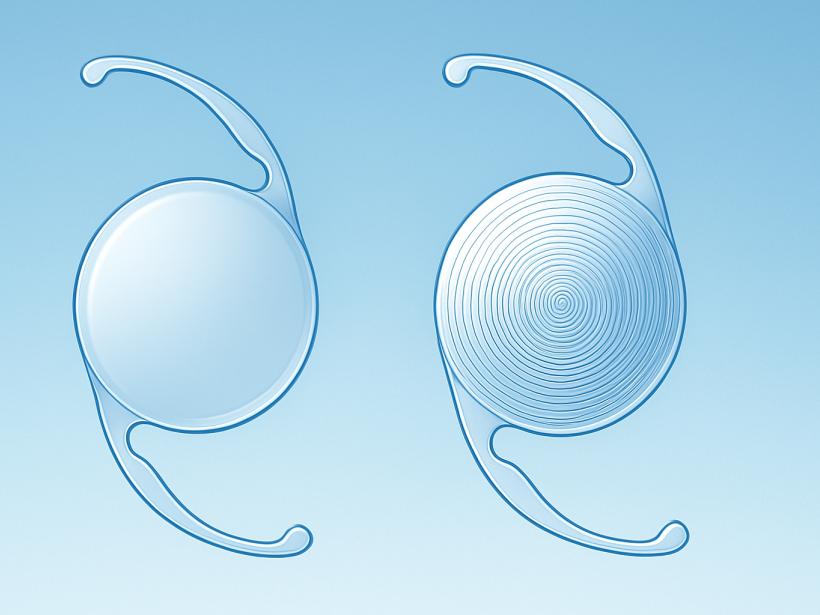
A monofocal IOL has one fixed focal point. Your surgeon can target it for clear distance vision (driving, outdoor activities), intermediate vision (computers, cooking), or near vision (reading). Most people choose distance targeting and then wear glasses for near tasks.
- Strengths: High-quality, crisp vision at the targeted distance; typically fewer issues with glare and halos than multifocal designs; generally strong performance for night driving and low-contrast situations.
- Considerations: You will likely need glasses for other distances, especially reading and close work, because a single-focus lens does not provide a full range of focus.
- Options within this category: Toric monofocal IOLs can correct regular corneal astigmatism. They do not correct irregular astigmatism (for example, from keratoconus or corneal scars). Some patients choose monovision—one eye set for distance and the other slightly myopic for near. This can reduce reliance on readers but may compromise depth perception and night comfort. A mini- or micro-monovision approach (smaller difference between eyes) can extend range with fewer trade-offs; a contact lens trial is ideal when feasible.
What Is a Multifocal IOL?
Multifocal IOLs use ring-like or segmented optics that split incoming light to create more than one focal point—typically distance and near, with some designs adding intermediate. The goal is to reduce dependence on glasses across common activities.
- Strengths: Broader range of unaided vision, often including reading and many intermediate tasks in good lighting.
- Considerations: Splitting light can increase the likelihood of night-vision phenomena (glare, halos, starbursts) and reduce contrast sensitivity, especially in dim settings. Performance can vary by pupil size, lighting, and lens design.
- Related category: Extended depth-of-focus (EDOF) lenses are designed to “stretch” focus, often providing strong distance and intermediate vision with a lower average rate of night-vision symptoms than classic multifocals. Many people still need readers for fine print or prolonged near work. Discuss the distinctions if you are considering presbyopia-correcting options.
Monofocal vs Multifocal IOL: Head-to-Head
Range of Clear Vision
Monofocal: Delivers clear vision at the single distance it is set for. If targeted for distance, expect sharp far vision and glasses for near; if targeted for near, expect the reverse. Monovision or mini-monovision can extend functional range but involves compromise in depth perception and may take adaptation.
Multifocal: Provides multiple focal points so many people can see well at distance and near without glasses, with variable intermediate performance depending on the design. Very fine print, very close tasks, or prolonged near work may still benefit from low-power readers for some patients.
Will I Still Need Glasses?
Monofocal: Most people need glasses for at least some activities—commonly for reading and close work if distance is targeted. Progressive or bifocal glasses after surgery are common.
Multifocal: Evidence summarized by independent reviews indicates that multifocal lenses can reduce spectacle dependence compared with monofocals. However, many people still use glasses for certain tasks, fine print, or extended near work.
Night Vision, Glare, Halos, and Contrast
Monofocal: Lower likelihood of glare and halos for most people and generally good contrast sensitivity, which supports clearer vision in dim conditions. Night driving comfort is often favorable compared with multifocals.
Multifocal: A higher chance of glare, halos, and starbursts—especially around lights at night—along with some reduction in contrast sensitivity. These effects can be more noticeable in dim light, rain, fog, or when reading low-contrast print. Many patients adapt over time, but not everyone finds these effects acceptable.
Quality of Vision and Adaptation
Monofocal: Typically provides crisp, high-contrast vision at the targeted distance with minimal neuroadaptation.
Multifocal: Because light is divided between focal points, the brain must learn to select the desired image. Neuroadaptation can take weeks to months. During this period, halos or a “waxy”/less contrasty appearance may be more noticeable. A small subset of patients does not adapt well.
Who Might Do Well with Each Lens?
Lifestyle and Daily Tasks
- Monofocal may suit you if:
- You prioritize the highest perceived distance clarity and night driving comfort.
- You are comfortable using readers for near tasks.
- Your work or hobbies demand strong contrast and precision in variable lighting (for example, frequent night driving or detailed work in dim environments).
- Multifocal may suit you if:
- You want to minimize glasses for a broad range of daily activities (phone use, reading menus, shopping, many computer tasks) and typically function in good lighting.
- You can accept a higher chance of glare/halos and some reduction in contrast, especially at night.
- You can be patient with the adaptation period and are open to using readers for very fine print if needed.
Eye Health Factors and Candidacy
Your eye’s overall health can influence which IOL category performs best:
- Astigmatism: Significant regular corneal astigmatism should be addressed for best results. Toric versions exist in monofocal and some presbyopia-correcting designs; precise measurements, correct rotational alignment, and surgical planning are essential. Toric lenses do not correct irregular astigmatism.
- Macular disease, glaucoma, corneal disease, or diabetic retinopathy: Conditions that reduce contrast sensitivity or retinal function can blunt the benefit of multifocals. In such settings, a monofocal lens is often preferred because it preserves contrast and has fewer optical side effects.
- Ocular surface and pupils: Dry eye and meibomian gland dysfunction can degrade image quality and biometry. Treating the surface before surgery improves outcomes for any lens. Very large pupils may increase night-vision symptoms with multifocals.
- Lens support and cornea: Pseudoexfoliation or zonular weakness may limit candidacy for certain premium designs. Fuchs’ dystrophy, corneal scars, or keratoconus can reduce quality with multifocals.
- Previous refractive surgery (LASIK/PRK/RK): Irregular optics and altered corneal curvature can complicate IOL power calculations and may affect candidacy and expectations. Careful counseling is important.
Your surgeon will consider corneal shape and regularity, eye length, the health of the retina and optic nerve, tear film quality, and your visual goals to help narrow the choices.
Pre-Operative Planning Tips
- Optimize the ocular surface: Managing dry eye and eyelid disease before measurements improves accuracy and post-op quality with any IOL.
- Pause contact lenses before measurements: A short “contact lens holiday” (often days to weeks, longer for rigid lenses) helps the cornea return to its natural shape for more reliable IOL calculations.
- Trial monovision when possible: Testing with contact lenses or in-office trial lenses can preview how you tolerate inter-eye differences.
- Discuss tolerance for optical trade-offs: Your comfort with halos, glare, and contrast reduction should be weighed against your desire to be glasses-independent.
Cost and Insurance Coverage in the U.S.
Cataract surgery is generally covered by Medicare and most insurers when medically necessary. A standard monofocal IOL is typically included in that coverage. If you choose options that correct presbyopia (such as multifocal or many EDOF designs), there is usually an additional out-of-pocket cost for the lens and related testing or surgical steps. Toric lenses for astigmatism may also involve added expense, depending on your plan.
Exact fees vary by practice, region, and insurance policy. Ask for a written estimate that separates medical benefits from elective upgrades so you understand your total costs and payment options.
Setting Expectations: What Success Looks Like
- With monofocal: Expect excellent clarity at one distance and likely use of glasses for other ranges. Night driving is often comfortable, and contrast is typically strong.
- With multifocal: Expect reduced dependence on glasses across many activities but be prepared for halos/glare at night and some reduction in contrast, especially early on during neuroadaptation. Good lighting improves near performance.
- With monovision (monofocal approach): May reduce readers but can affect depth perception and night comfort. A pre-op trial helps set expectations.
Universal considerations:
- Dysphotopsias can occur with any IOL: Even monofocals can cause unwanted images such as edge reflections or a temporal dark arc (“negative dysphotopsia”) in a minority. Symptoms often lessen with time but may persist.
- Residual refractive error is possible: Despite careful measurements, you may have some nearsightedness, farsightedness, or astigmatism after surgery and may prefer glasses for certain tasks. Some patients consider a laser “touch-up” or, rarely, a lens exchange.
- Posterior capsule opacification (PCO): Months to years after surgery, the membrane behind the IOL can haze and blur vision. An in-office Nd:YAG laser capsulotomy can clear PCO. This procedure treats opacification, not halos, and can make a later IOL exchange more complex—so timing matters if you are still deciding about an exchange.
- Healing and adaptation: Vision often stabilizes over weeks. Neuroadaptation to multifocal or monovision strategies can take weeks to months. Patience and realistic goals help.
Questions to Ask Your Surgeon
- Based on my eye health and measurements, am I a good candidate for multifocal or EDOF IOLs, or would a monofocal be the safer, more predictable choice?
- How much astigmatism do I have, is it regular or irregular, and should it be corrected with a toric lens or a surgical technique?
- What level of glasses use should I expect for reading, computer work, and night driving with each option?
- How often do your multifocal/EDOF patients experience night-vision symptoms, and how are they managed if I find them bothersome?
- Could monovision or mini-monovision be an alternative for me, and can we trial it with contact lenses first?
- What is your approach if I have residual refractive error—glasses, laser enhancement, or lens exchange—and how does a prior Nd:YAG capsulotomy affect those options?
- Do I need a contact lens holiday before measurements, and how will you optimize my dry eye or ocular surface before surgery?
The Bottom Line
When comparing monofocal vs multifocal IOLs, think in terms of trade-offs: monofocals favor crispness, contrast, and night comfort with more glasses use, while multifocals aim to reduce glasses at the cost of a higher chance of glare/halos and some loss of contrast. EDOF lenses sit between these categories, often favoring distance and intermediate with fewer night-vision symptoms on average, but many people still use readers for fine print.
There is no universally “best” lens. Align your choice with your eye health, daily visual demands, and tolerance for optical trade-offs, and set realistic expectations with your surgeon. Seek prompt care after surgery for red flags such as increasing pain, sudden vision loss, or new flashes/floaters.
This information is educational and not a substitute for personalized medical advice. Lens selection and surgical planning should be individualized in consultation with your ophthalmologist.
Sources
- Cochrane — Multifocal versus monofocal IOLs
- American Academy of Ophthalmology — Presbyopia-correcting IOLs
- American Academy of Ophthalmology — Choosing an IOL