
What Is an EDOF IOL?
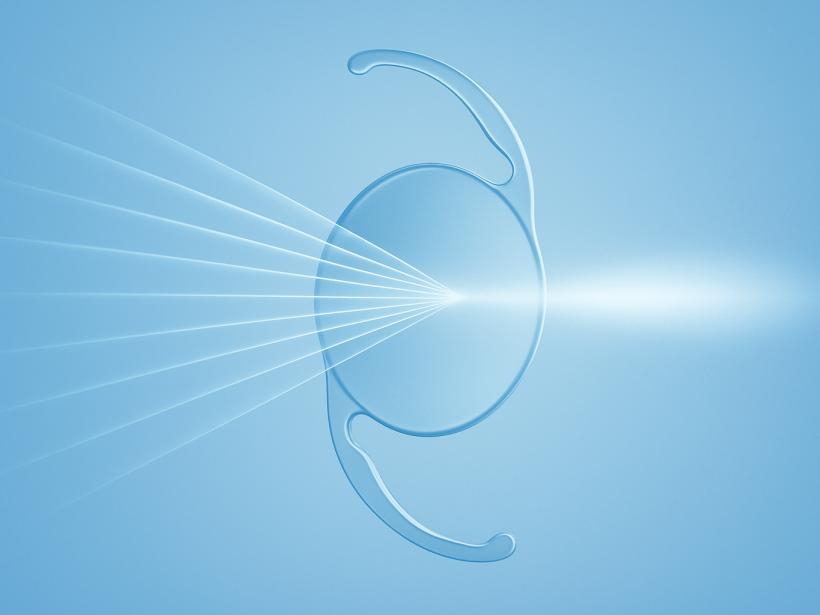
An extended depth of focus (EDOF) intraocular lens is a presbyopia-correcting lens placed during cataract surgery. During cataract surgery, the cloudy natural lens is removed to restore clarity, and the implanted intraocular lens (IOL) restores the eye’s focusing power. Unlike a standard monofocal IOL that provides one main focal point (usually distance), an EDOF lens is engineered to create a single, elongated focal area. This extended focus is intended to provide a broader range of clearer vision from far to intermediate distances, often reducing reliance on glasses for driving, computer work, cooking, and viewing a dashboard. Most people still use reading glasses for fine print or prolonged near tasks.
How EDOF Lenses Work
The elongated focus concept
Think of an EDOF lens as creating a smoother “corridor” of focus rather than multiple separate focal points. By gently elongating the zone over which the eye forms a sharp image, EDOF lenses aim to keep distance and mid-range tasks clear without the more abrupt transitions associated with multifocal or trifocal lenses. This approach helps maintain relatively natural visual quality for everyday activities. It does not typically provide strong, glasses-free focus at close reading distances.
Different design approaches
EDOF technology is achieved in several ways, depending on the model:
- Diffractive designs use fine surface structures to extend focus. These can produce halos or glare for some people, particularly in low light.
- Non-diffractive (wavefront-shaping) designs modify how light passes through the lens to extend the focal range, with the goal of balancing range and visual quality. Dysphotopsias can still occur.
- Small-aperture designs use a pinhole-like element to increase depth of field. They may be considered in select situations, such as some forms of irregular cornea. Because they reduce the amount of light entering the eye, they can dim the image and reduce contrast, especially in dim conditions, and are often used in one eye.
Many EDOF lenses come in toric versions to address astigmatism during cataract surgery. Toric IOLs are designed to correct regular corneal astigmatism; they do not correct irregular astigmatism from conditions such as keratoconus or scarring. Your surgeon will match the design to your eyes and visual goals after detailed measurements.
What Vision to Expect Day-to-Day
- Distance vision: Typically clear for driving, watching TV, and outdoor activities, especially when residual refractive error and astigmatism are minimized.
- Intermediate vision: A key strength of EDOF lenses, often well suited for computer work, cooking, hobbies on a workbench, or viewing the car dashboard.
- Near vision: Many people still prefer readers for small print (books, medication labels, sewing), tasks at close working distances, or prolonged near work. Some surgeons may target a small amount of nearsightedness in one eye (mini-monovision) to improve near range; this can reduce depth perception and night-vision quality and is not for everyone.
- Contrast and lighting: Compared with a standard monofocal, some EDOF designs may slightly reduce contrast sensitivity, particularly in low light. Good task lighting often helps for fine detail work. Pupil size and the ocular surface (for example, dry eye) can influence clarity and symptoms.
- Neuroadaptation: The brain adjusts to new optics over time. Many people notice improvement over weeks to months as adaptation occurs.
EDOF vs. Monofocal, Multifocal, and Trifocal IOLs
- Monofocal IOL: One focal point (usually distance). Often provides strong contrast and generally the fewest halos and glare. Glasses are typically needed for near and, for many people, for intermediate tasks.
- EDOF IOL: One elongated focal range. Aims to reduce glasses for distance and intermediate tasks, with night-vision phenomena that many people find less pronounced than with multifocal/trifocal lenses. Reading glasses are commonly still used.
- Multifocal/Trifocal IOL: Multiple distinct focal points (distance, intermediate, and/or near). These may offer greater near independence than EDOF but can produce more noticeable halos, glare, or starbursts at night for some people and may reduce contrast in dim conditions.
In short, EDOF lenses often strike a middle ground: more usable range than a monofocal, typically fewer visual side effects than trifocals, but less near strength than multifocal/trifocal designs. The best choice depends on your eye health, visual priorities, and tolerance for trade-offs.
Night Vision, Halos, and Other Trade-offs
Any presbyopia-correcting IOL can cause night-vision phenomena such as halos, glare, or starbursts around lights. EDOF lenses are often associated with fewer or less intense symptoms than multifocal/trifocal lenses, but they are not halo-free. Symptoms may lessen with neuroadaptation over weeks to months, yet a minority of patients remain aware of them.
Other factors can influence night vision and overall quality of vision, including dry eye, residual astigmatism, pupil size, minor refractive errors, posterior capsule opacification after surgery, and underlying eye conditions. Optimizing the ocular surface and the refractive outcome helps reduce unwanted visual effects. Nd:YAG capsulotomy treats blur from a cloudy posterior capsule; it does not treat halos caused by IOL optics. If you drive extensively at night or work in dim, high-contrast environments, discuss whether an EDOF lens aligns with your needs.
Who May Be a Candidate?
Good candidates for EDOF lenses generally:
- Want strong distance and intermediate vision with reduced reliance on glasses for daily activities like computer use and driving.
- Are comfortable using reading glasses for fine print or prolonged near work.
- Have healthy eyes overall and wish to balance an extended visual range with a typically lower likelihood of night-vision artifacts than trifocals.
Situations that may reduce suitability include:
- Retinal or optic nerve disease that limits contrast or central vision (for example, significant macular degeneration, advanced glaucoma, or macular edema).
- Significant corneal irregularity or scarring, keratoconus, previous radial keratotomy, or unstable ocular surface disease.
- Endothelial disease such as Fuchs dystrophy, or conditions affecting lens support (for example, pseudoexfoliation with zonular weakness).
- Severe dry eye that is not optimized before measurements and surgery.
- Uncontrolled diabetes or diabetic retinopathy affecting the macula.
- Occupations or hobbies demanding the best possible night vision (for example, professional night driving or certain aviation roles).
People with prior LASIK or PRK can sometimes do well with EDOF lenses, but measurements are more complex and the risk of refractive surprise or visual phenomena may be higher. A careful preoperative evaluation, including corneal topography and tear film assessment, is essential.
Surgical Planning and Options
- Preoperative measurements: Biometry, corneal topography, and assessment of the ocular surface guide lens power selection and astigmatism management. A contact lens “holiday” before measurements can improve accuracy, particularly with rigid lenses. Treating dry eye beforehand improves reliability.
- Astigmatism correction: Toric EDOF lenses and/or corneal relaxing incisions can fine-tune clarity, especially for distance and intermediate tasks. Toric IOLs correct regular corneal astigmatism; they do not correct irregular astigmatism or internal (lenticular) astigmatism.
- Target refraction: Many surgeons target both eyes at distance with EDOF for balanced binocular vision. Some consider low myopia in the non-dominant eye (mini-monovision) to extend near; this introduces trade-offs in depth perception and night vision and should be discussed and, when possible, trialed with contact lenses preoperatively.
- Mix-and-match strategies: In select cases, surgeons may pair an EDOF lens in one eye with a monofocal or another presbyopia-correcting option in the fellow eye to customize the range. This approach is individualized and depends on your visual tasks and tolerance for differences between eyes.
- Refractive lens exchange: Some people without visually significant cataract consider lens replacement to reduce glasses dependence. This elective approach carries cataract-surgery risks and, in certain groups (for example, younger high myopes), a higher risk of retinal detachment. A thorough risk–benefit discussion is essential.
Recovery, Fine-Tuning, and Troubleshooting
- Healing and adaptation: Many people notice improved clarity within days, with vision stabilizing over several weeks. Neuroadaptation to the lens optics continues for weeks to months.
- Glasses after surgery: Readers are common for small print. Some people use mild prescriptions for specific tasks (for example, prolonged computer sessions or detailed crafts).
- Residual refractive error: If a small prescription remains, options include glasses, contact lenses, or laser vision enhancement after the eye has healed and refraction is stable. In certain cases, a secondary (piggyback) lens or an early IOL exchange may be considered.
- Posterior capsule opacification (PCO): Months or years after surgery, the posterior capsule can become cloudy, causing blur or glare. An in-office Nd:YAG capsulotomy can restore clarity when appropriate. Because this laser permanently opens the capsule and makes IOL exchange more complex, surgeons often confirm that other issues (such as residual refractive error or ocular surface disease) have been addressed before proceeding.
- When to call: Contact your surgeon promptly for increasing pain, a sudden drop in vision, new flashes of light, a curtain or shadow over your vision, or significant redness.
Costs and Insurance
In the United States, Medicare and many insurers typically cover medically necessary cataract surgery with a standard monofocal lens. Presbyopia-correcting features like EDOF and astigmatism-correcting toric options are usually considered upgrades with additional out-of-pocket costs. Practices may offer package pricing; ask for a written estimate that clarifies what is included (surgeon, facility, anesthesia, lens upgrade, postoperative visits, and any potential enhancements).
Questions to Ask Your Ophthalmologist
- Given my eyes and lifestyle, how does an EDOF lens compare with monofocal or multifocal/trifocal options?
- What range of vision can I reasonably expect for distance, computer work, and reading? Will we consider mini-monovision?
- How likely are halos, glare, or a decrease in contrast for me? How do we minimize these risks?
- Do I have astigmatism, and should we consider a toric EDOF lens? Is my astigmatism regular or irregular?
- How will prior LASIK/PRK or dry eye affect measurements and outcomes for me?
- What is the plan if I’m not satisfied after surgery (glasses, laser enhancement, IOL exchange), and when would a YAG capsulotomy be appropriate?
Bottom Line
EDOF lenses extend the range of clear vision, especially for distance and intermediate tasks, with a night-vision profile that many people find gentler than multifocal or trifocal lenses. They do not typically replace reading glasses for fine print. Because every eye and lifestyle is unique, review your goals, measurements, and trade-offs with your ophthalmologist to decide whether an extended depth of focus lens fits your needs.
This information is educational and not a substitute for personalized medical advice. Decisions about IOLs should be made with your eye surgeon based on your examination and goals.
Sources
- American Academy of Ophthalmology — Presbyopia-correcting IOLs
- Cochrane — Trifocal versus EDOF IOLs
- American Academy of Ophthalmology — Choosing an IOL